Ordering one custom jersey is easy. Ordering twenty for a team is where things go sideways, because a size that reads as race-tight to one rider reads as a tent to another. Most fit complaints on a team order are not manufacturing errors at all. They are decisions that were never made before the order went in. Here is how to make those decisions in the right order so the kit fits on the first try and matches on every reorder after.
Decide the fit before you look at a single size chart
Custom cycling jerseys are cut to a fit intent, and most brands offer three. A club or relaxed cut is the loosest, meant for endurance rides, layering, and riders who do not want fabric hugging every contour. A race cut sits snug but not skin-tight, with a little breathing room through the chest and waist. A pro or aero cut is the most compressed, cut slim through the torso with a narrow sleeve so nothing flaps at speed. The practical gap between them is real: as a rule of thumb, a club fit runs about one full size looser than a race fit at the same body measurement. That single fact is behind more team ordering mistakes than any other, because two riders can order the same numeric size and receive garments that feel a size apart.
Take three measurements, not one
Chest is the anchor measurement. Have each rider measure around the fullest part of the chest, just below the underarms, keeping the tape level and snug but not compressed. That number alone gets most riders close, but two more measurements catch the outliers. Waist matters because cyclists are often a size smaller through the middle than their chest suggests, and a rider who is broad up top but lean below may prefer to size on chest and accept a slightly roomier waist. Height and weight together flag the riders who fall between sizes, which is exactly where fit intent has to break the tie. For long-sleeve winter kit, add a sleeve measurement from the center-back neck to the wrist with the arm slightly bent. Measure over the base layer riders actually wear, not bare-chested, or the summer numbers will run tight under a winter thermal.
Read the chart as ranges, and let fit intent break ties
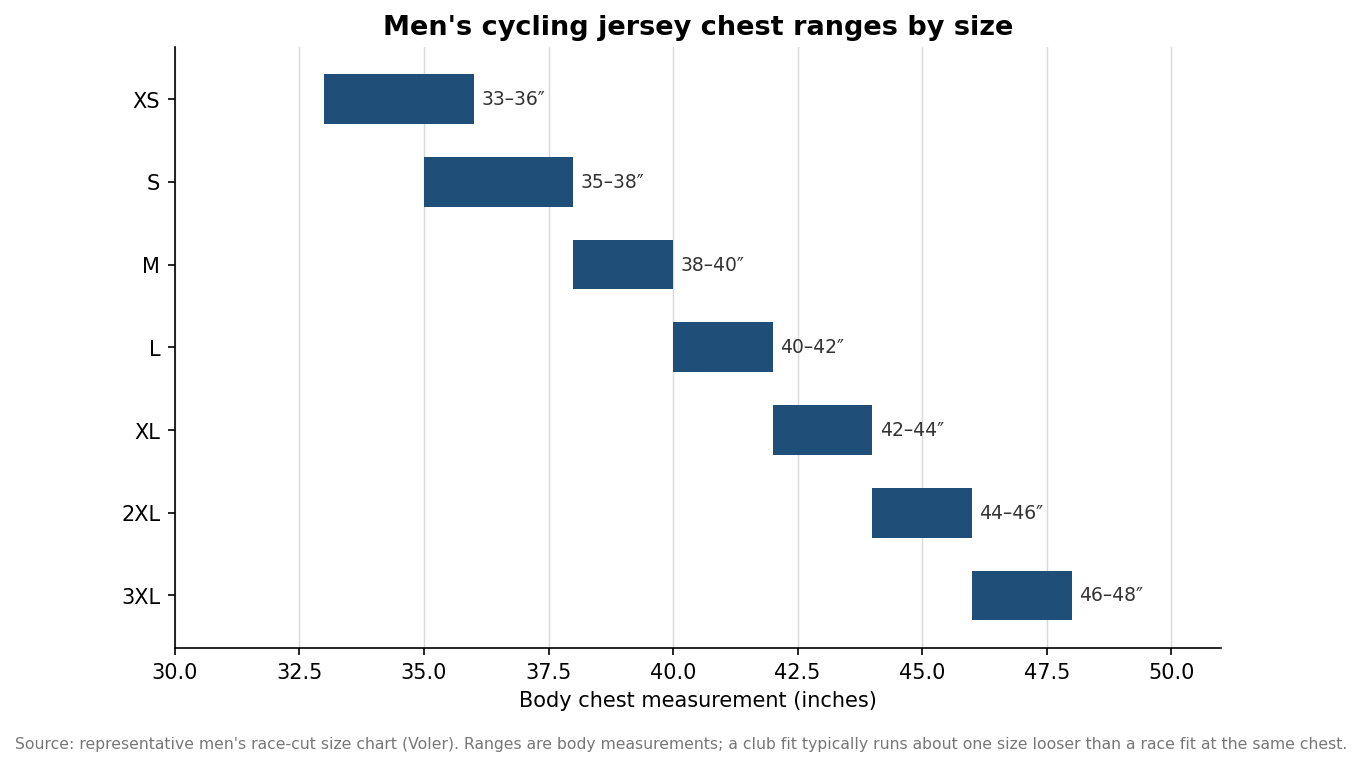
Cycling size charts are built as overlapping ranges, not single points, and the overlaps are intentional. A representative men’s race-cut chart runs roughly XS at a 33 to 36 inch chest, S at 35 to 38, M at 38 to 40, L at 40 to 42, XL at 42 to 44, 2XL at 44 to 46, and 3XL at 46 to 48. The overlaps exist precisely so fit preference can decide. A rider who measures 38 inches sits on the S-to-M boundary: in a race cut they size down to M-tight or stay at S for a true race feel, and in a club cut they size up for the relaxed drape they are expecting. Put the chart in front of every rider alongside the fit definitions, and the borderline cases resolve themselves instead of becoming reorder emails later.
Collect sizes across the team without the chaos
The cleanest way to size a group is to never let anyone guess. If your supplier offers a sizing kit or demo set, order it first and hold a short fitting session; twenty minutes of riders trying on real garments prevents most of the back-and-forth. When that is not practical, send one shared spreadsheet with three columns filled in per rider: measured chest, fit preference, and any note like “prefers roomy” or “broad shoulders.” Set a hard deadline and treat missing entries as unsized rather than defaulting them, because a guessed size is the one that comes back. Confirm whether riders want a women’s-specific cut, which is shaped differently through the chest and shoulders and is not the same as a smaller unisex size, and expect one or two riders to deliberately size up for comfort. That is a valid choice, not an error, as long as it is recorded.
Lock the spec so reorders actually match
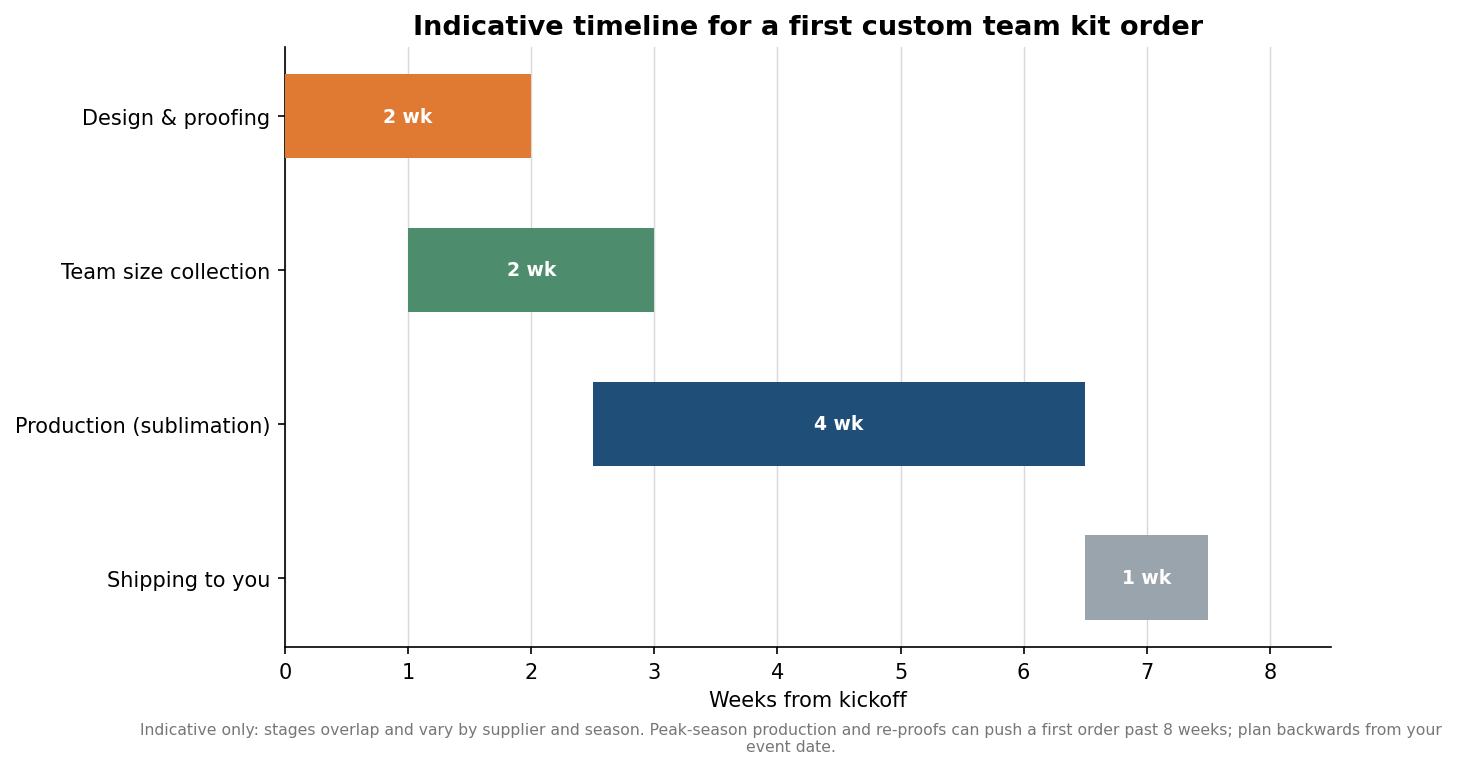
Full-custom sublimated kit is made to order, so the economics reward batching. At Customized Cycling Jerseys the minimum order is 12 pieces, and sizes can be mixed within that count. Production takes about 2 weeks after you approve the artwork proof, with the free mockup arriving within 24 hours of sending your brand, so a first order is quick provided your size list is settled before you approve. Plan backwards from your event date rather than forwards from today. The detail that saves you later is keeping the approved artwork and the final size list on file, because a mid-season addition for one new rider is where costs spike: a tiny top-up order is awkward and slower than building a small buffer into the first run. The price per jersey is driven by fabric, panel count, cut, and quantity, so send your list to Customized Cycling Jerseys for a quote and a free mockup.
None of this requires special expertise, just sequence. Settle the fit intent, measure three numbers, read the chart as ranges, gather sizes with a real deadline, and freeze the spec so the reorder in six months matches the batch you have today. Do that and the kit fits the first time, which is the only version of a team order anyone remembers fondly.