Good custom cycling jersey artwork is planned panel by panel, not drawn as one flat picture. Customized Cycling Jerseys sublimates your design onto the front, back, sides and sleeves separately, so logos must avoid seams, zips and pockets. Send your files, get a free mockup within 24 hours, revise until it is right, and pay nothing until you approve.
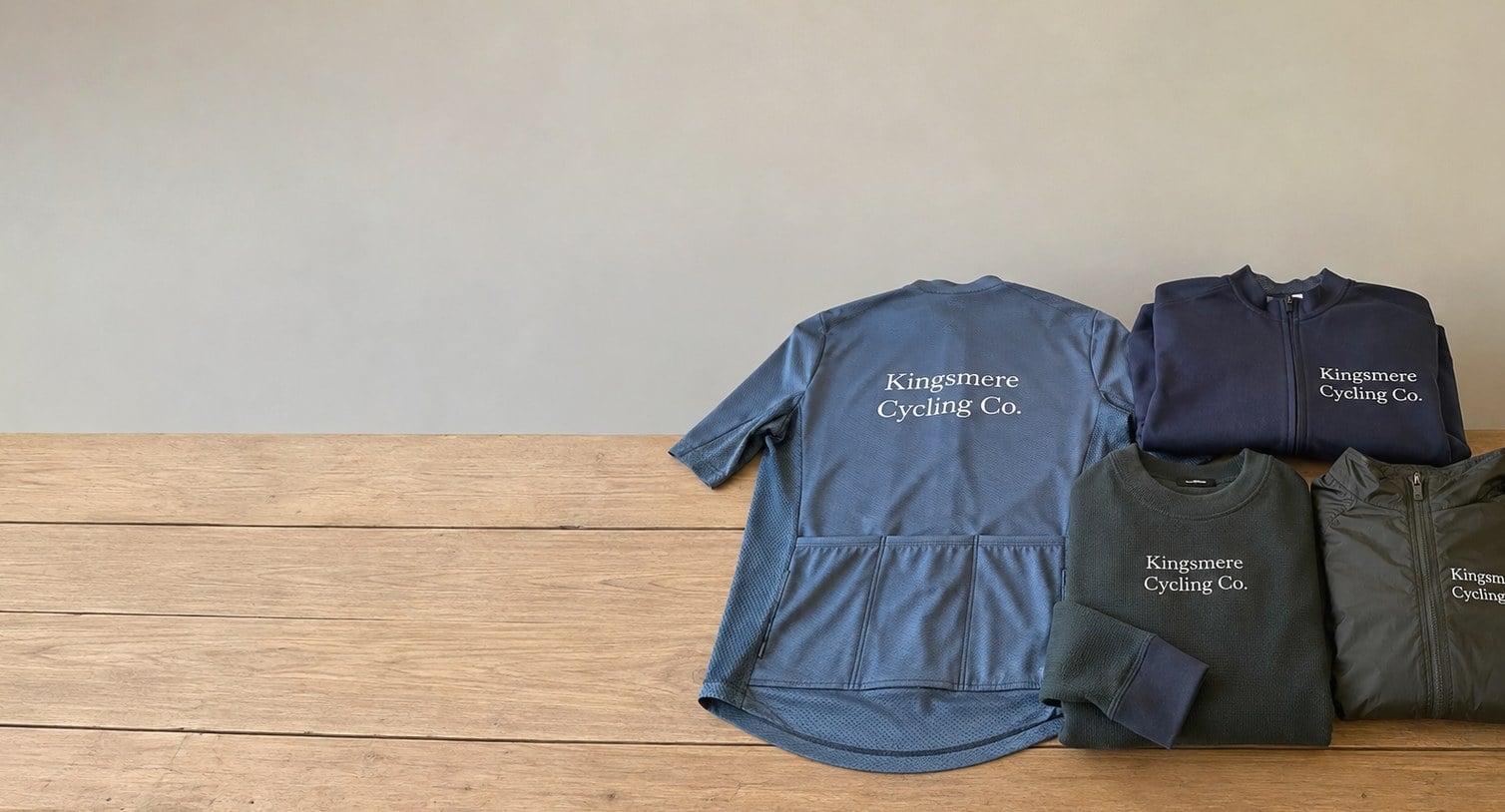
- Cycling jerseys are printed panel by panel, so artwork has to respect seams, the zip and the rear pockets.
- Vector logos (AI, EPS, SVG or PDF) give the sharpest edges on sublimated cycling jerseys.
- Customized Cycling Jerseys returns a free mockup within 24 hours with unlimited free revisions.
- Nothing is charged until the club or team approves the final design.
- Orders start at a minimum of 12 cycling jerseys, with standard turnaround of about 2 weeks.
How is artwork laid out on a custom cycling jersey?
Artwork on a custom cycling jersey is laid out across separate fabric panels: a front panel split by the zip, a back panel, side panels, sleeves and often a collar. Each panel is sublimated flat before the jersey is cut and sewn, so your design is really a set of shapes that meet at seams rather than one continuous canvas.
That matters because a jersey is a fitted, stretchy garment worn in a riding position. The front shortens when a rider is down on the bars, the back lengthens, and the rear pockets fold fabric over itself. A logo that looks centered on a flat drawing can end up half hidden under a pocket flap or bent around a side seam.
Customized Cycling Jerseys works from a jersey template that shows every panel, the zip line, the pocket line and the seams. Placing your design on that template, rather than on a picture of a T-shirt, is the single biggest step toward kit that looks right on the bike and in photos.
Where should club and sponsor logos go on a cycling jersey?
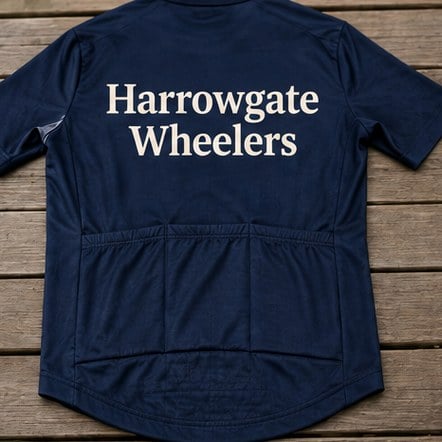
Club and sponsor logos on a cycling jersey work best in the zones that stay flat and visible while riding: the upper chest on either side of the zip, the upper back above the pockets, the sleeves and the side panels. Each zone has a different job, so rank your logos before you place them.
- Upper back: the most-seen area in a group ride and the natural home for the club name or main sponsor.
- Chest: visible in photos taken from the front and at the cafe stop; split long logos so the zip does not cut through a letter.
- Sleeves: good for a secondary sponsor, a flag or a short web address.
- Side panels: tall, narrow space that suits a stacked wordmark or a pattern rather than a detailed logo.
- Rear pockets: avoid fine detail here, because the pocket opening and stretched fabric distort it.
- Collar and hem: small text such as a club motto or a hashtag reads well here.
When several sponsors share one cycling jersey, agree the order of priority inside the club first. It saves rounds of revisions later.
What makes cycling jersey artwork look sharp after sublimation?
Cycling jersey artwork looks sharp after sublimation when logos are supplied as vector files and photos or textures are supplied at full original resolution. Sublimation dyes the fabric itself, so it reproduces exactly what it is given; a soft or pixelated file prints as a soft or pixelated jersey.
Vector logos in AI, EPS, SVG or PDF format scale cleanly from a small sleeve mark to a full-width back panel. If a sponsor only has a logo pulled from a website, ask their marketing contact for the original file before the mockup stage rather than after it.
Fine lines and very small text are the other common weak point. A hairline outline that looks crisp on screen can disappear into the knit of a technical fabric, and tiny lettering becomes hard to read on a moving rider. Thicken thin strokes, keep secondary text a readable size, and give logos clear space from busy background patterns. The Customized Cycling Jerseys design team flags these issues on the mockup so they can be fixed before production.
How do you keep club colors consistent across cycling jerseys and reorders?
Club colors stay consistent on cycling jerseys when you give the printer a defined color reference and keep using the same approved artwork file for every reorder. Screens vary from phone to laptop, so a color picked by eye from a monitor is not a reliable target for fabric.
Start by telling Customized Cycling Jerseys which colors are fixed brand colors, such as a club’s traditional blue or a sponsor’s exact red, and which colors are flexible design choices. If your club or sponsor uses Pantone references, include them with the artwork. Saturated colors and strong contrasts tend to reproduce best on polyester, while very pale tints and colors that rely on subtle gradients need more care.
| Color situation | What to send | What to watch on the proof |
|---|---|---|
| Club heritage color | Pantone reference or a previous jersey for comparison | Match against the reference, not your screen |
| Sponsor brand color | Sponsor brand guidelines | Logo color against the jersey background |
| Fade or gradient panel | Layered file with start and end colors | Smooth transition across seams |
| Reorder of existing kit | Request the archived approved design | No accidental edits since the first run |
Keeping the approved file archived means a new rider who joins later gets a jersey that matches the rest of the bunch.
Can each rider have a name or number on a custom cycling jersey?
Yes, custom cycling jerseys can carry a different rider name, initials or number on each piece within the same order, because sublimation prints every panel individually. Names usually sit on the upper back, the collar or a sleeve, where they stay readable without competing with the club name.
Personalization only works smoothly when the list is clean. Collect names and sizes in a single spreadsheet, check spelling with each rider, decide on capitals or mixed case, and keep the font consistent with the rest of the jersey. Mixed-up names are one of the few artwork errors that cannot be fixed after printing, so a second person should read the list before you send it.
Personalization is especially popular for race teams, charity ride groups and club anniversary kits, where riders keep the jersey long after the event. See the corporate charity ride team page for how names and fundraising messages are often combined.
What should you check on a cycling jersey mockup before you approve it?
Before approving a cycling jersey mockup, check spelling, logo placement against the seams and pockets, color references, and any rider personalization, then confirm the cut and garment options. The mockup from Customized Cycling Jerseys arrives within 24 hours and revisions are unlimited and free, so there is no reason to approve anything you are unsure about.
- Read every word aloud, including sponsor names, web addresses and the club motto.
- Check that no logo crosses the zip, a side seam or the pocket opening in a way that breaks it.
- Compare key colors against your reference rather than your screen.
- Confirm the cut, whether race fit or club fit, because the same artwork sits slightly differently on each.
- Check the matching items, such as gilets or long-sleeve jerseys, use the same layout and colors.
- Ask sponsors to sign off on their own logo before the club approves.
Once the design is approved, payment is taken and production begins, with standard turnaround of about 2 weeks.
Which artwork mistakes cause problems on a first cycling jersey order?
The artwork mistakes that cause the most trouble on a first cycling jersey order are designing on a flat T-shirt shape, sending low-resolution sponsor logos, and leaving too many decisions to a committee late in the process. Each one delays approval or produces kit that looks different from what riders expected.
- Too many logos: a cycling jersey can carry several sponsors, but cramming every one onto the chest makes none of them readable.
- Ignoring the riding position: large chest graphics compress when a rider is on the drops, so keep key marks high on the front.
- Dark text on a dark background: contrast that works on a bright monitor can vanish on fabric in flat light.
- Late sponsor changes: agree the sponsor list before design starts, not after the mockup.
- One design for every garment: gilets and long-sleeve jerseys have different panels, so ask for each item to be laid out on its own template.
None of these require design skills to avoid. Share your ideas, logos and colors with Customized Cycling Jerseys, and the design team builds the layout on the correct templates for you.
How do you get started with custom cycling jersey artwork?
Getting started with custom cycling jersey artwork takes a short brief and whatever logos you already have. Send Customized Cycling Jerseys your club or team name, logo files, color references, sponsor list in priority order, any rider names, the garments you want and a rough quantity, starting from a minimum of 12.
A sketch on paper, a photo of an old club jersey or a few example kits you like are all useful starting points. The design team turns them into a panel-by-panel mockup within 24 hours, you revise as often as needed, and you pay nothing until the design is approved. Use the custom quote form to send your brief, or read how it works for the full ordering process.
Frequently asked questions
Can I design my own cycling jersey without design software?
Custom cycling jerseys can be designed without any software at all. Send Customized Cycling Jerseys a hand sketch, a photo of an old kit or a few example jerseys you like, along with your logos and colors. The design team builds the full panel layout on the correct jersey template and returns a free mockup within 24 hours for you to review and revise.
How many sponsor logos can fit on one cycling jersey?
Custom cycling jerseys can carry several sponsor logos spread across the chest, upper back, sleeves, side panels and collar. The practical limit is readability rather than space, so rank sponsors by priority and give the main partner the upper back or chest. Customized Cycling Jerseys will suggest a layout on the mockup that keeps every logo clear and avoids seams and pockets.
Why does my logo look blurry on the cycling jersey mockup?
Cycling jersey mockups show blurry logos when the supplied file is a small web image or screenshot rather than an original vector file. Sublimation prints exactly what it receives, so a soft file becomes a soft jersey. Ask the logo owner for an AI, EPS, SVG or PDF version, and Customized Cycling Jerseys will update the mockup at no charge.
Can the design wrap around the side seams of a cycling jersey?
Cycling jersey designs can continue from the front panel across the sides to the back, and stripes, fades and patterns often do. Because each panel is printed separately before sewing, the design team aligns the pattern at the seams on the template. Detailed logos and text should still sit inside a single panel so a seam never cuts through lettering.
Will the same artwork fit both race-fit and club-fit cycling jerseys?
Club artwork for cycling jerseys can usually be shared between race-fit and club-fit cuts, but the panels are shaped differently, so each cut needs its own layout. Customized Cycling Jerseys places the design on both templates and shows them on the mockup, which lets riders choose the cut they prefer while the club look stays identical across the bunch.
Can a cycling jersey design include a photo or detailed illustration?
Custom cycling jerseys can reproduce photos, illustrations and detailed textures because sublimation dyes full color into the fabric. The image needs to be supplied at its original full resolution, and important details should avoid seams, the zip and the rear pockets. Customized Cycling Jerseys checks image quality on the mockup and flags anything that would print soft.
Should our club motto go on the collar or the back of the cycling jersey?
A club motto on custom cycling jerseys usually works best on the collar, the inside of the collar or the hem, where short text stays readable without crowding the main logos. Longer mottos can sit across the upper back if the club name is placed elsewhere. Customized Cycling Jerseys can show both options on the free mockup so the club can compare.
How do sponsors approve their logo on a club cycling jersey?
Sponsor approval on club cycling jerseys is easiest when the club shares the mockup image with each sponsor before giving final sign-off. Ask sponsors to confirm logo version, color and position in writing. Customized Cycling Jerseys offers unlimited free revisions, so any sponsor change can be made before approval, and nothing is charged until the club approves the final design.
Can we add a new sponsor to our cycling jersey for the next reorder?
Sponsor changes on custom cycling jerseys are straightforward at reorder time because the approved design is kept on file. Send the new logo and say which sponsor it replaces or where it should go. Customized Cycling Jerseys updates the existing layout and returns a fresh mockup within 24 hours, so the rest of the kit stays consistent.
Do reflective details or high-contrast colors help on cycling jersey artwork?
High-contrast colors on custom cycling jerseys make riders and logos easier to see on the road, especially in flat winter light. Bright panels on the back and sleeves are a common choice for clubs riding in traffic. Customized Cycling Jerseys can suggest color placements on the mockup and confirm which reflective trims are available for the chosen garment.
Can matching gilets use the same artwork as our cycling jerseys?
Matching gilets can carry the same artwork as your custom cycling jerseys, but a gilet has no sleeves and a different back panel, so logos are re-placed rather than copied. Customized Cycling Jerseys lays out each garment on its own template and shows them together on the mockup, which keeps the club look consistent across jerseys, gilets and long-sleeve kit.
Get a free mockup for your cycling jerseys
Send your logo or idea and the quantity you have in mind. Customized Cycling Jerseys returns a free mockup within 24 hours, you approve the design before anything is produced, and standard turnaround is about two weeks with faster options available. Get a custom quote.