A custom cycling kit is only cheap the first time you order it correctly. The reorders — the second production run to fix sizing, the rushed replacement after a color came back wrong, the top-ups because the first order fell below the minimum — are where teams quietly lose money. Almost all of it is avoidable at the specification stage. These are the mistakes that most often send a team back for a second order, and how to design them out.
Skipping the fit kit
Cycling kit is cut close and sized differently from street clothes, so a rider’s normal shirt size is a poor guide to a race-fit jersey. The most expensive assumption a team makes is that everyone can self-select from a printed size chart. Most custom apparel makers offer a fit kit — a set of sample garments in each size that riders try on before the order is placed, usually for a small shipping fee with a prepaid return label. Circulating that kit for a week costs little more than a bit of scheduling. Skipping it routinely produces two or three riders whose jerseys do not fit, and because full-custom minimums apply per style, a corrective run is rarely a single garment. Have every rider try the actual samples, record the size, and note who sits between sizes and which way they prefer to round. Pay particular attention to women’s-specific cuts and to bib shorts, where leg length and chamois position vary more between riders than jersey size does, and where a poor fit is felt on every ride rather than just noticed in a team photo.
Approving artwork without a real proof
Sublimation prints the design into the fabric, so what you approve on a laptop is not what comes off the roll. Screens emit light and fabric reflects it; saturated blues, fluorescent greens, and precise brand colors are the usual casualties, shifting a shade or two once heat-pressed into polyester. Two habits prevent it. First, supply artwork as vector files — .AI or .EPS — because raster files like JPEG or a low-resolution PNG have to be rebuilt and lose crispness on logos and text; many shops offer a paid press-ready service if a raster file is all you have, but that adds time. Second, ask how brand colors are matched — reputable shops generally work to Pantone references — and request a printed proof or a swatch on the actual fabric before the full run. A single proof is far cheaper than reprinting a peloton’s worth of jerseys because a sponsor’s blue came back closer to purple. If sponsor obligations are involved, that proof is also your evidence that the logo was reproduced to spec, which matters when someone else is paying for the placement.
Ordering the wrong weight for the season
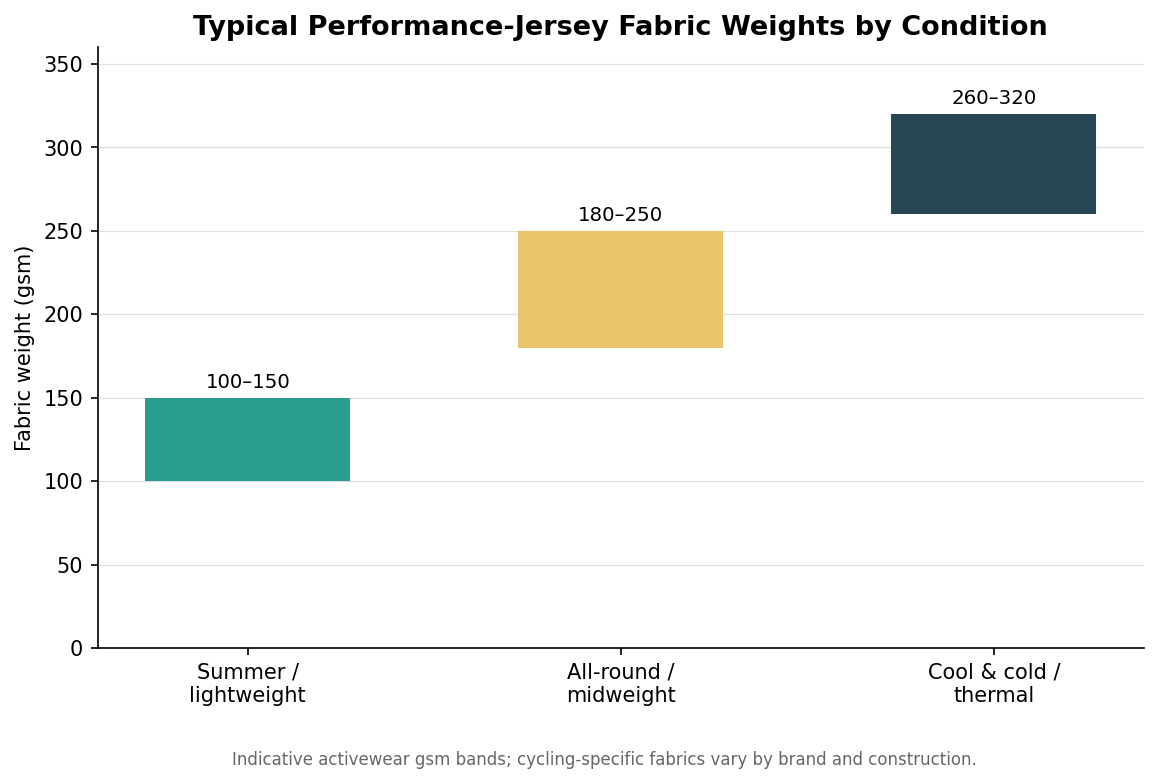
Fabric weight, measured in grams per square meter, decides whether a jersey is comfortable in the conditions it will actually be worn in. Lightweight performance fabrics in roughly the 100 to 150 gsm range prioritize breathability and quick drying for hot-weather riding. Midweight fabrics around 180 to 250 gsm are the all-round sweet spot, balancing support and airflow. Heavier fabrics above about 260 gsm add insulation and structure for cool and cold conditions but trap heat if worn in summer. Teams get caught ordering one weight for a season-long kit and discovering it is stifling in July or thin in October. Match the weight to the racing calendar, and if the kit has to span seasons, a lighter jersey paired with arm warmers usually beats a single compromise fabric.
Underestimating the minimums
Full-custom apparel almost always carries a minimum order quantity, which at Customized Cycling Jerseys is 12 pieces, with men’s and women’s cuts often mixed within that count; semi-custom or quick-custom programs may drop the minimum to a single piece but give up some design freedom. The trap is ordering exactly to a roster that then grows. A new member in month two means a reorder, and a reorder that slips below the design minimum can cost far more per unit than if you had built a small buffer into the first run. Order a few spare units in the common sizes, confirm the reorder minimum before you commit, and keep the design files and color references on hand so a later top-up matches the original rather than arriving as a visibly different batch.
Leaving no room in the timeline
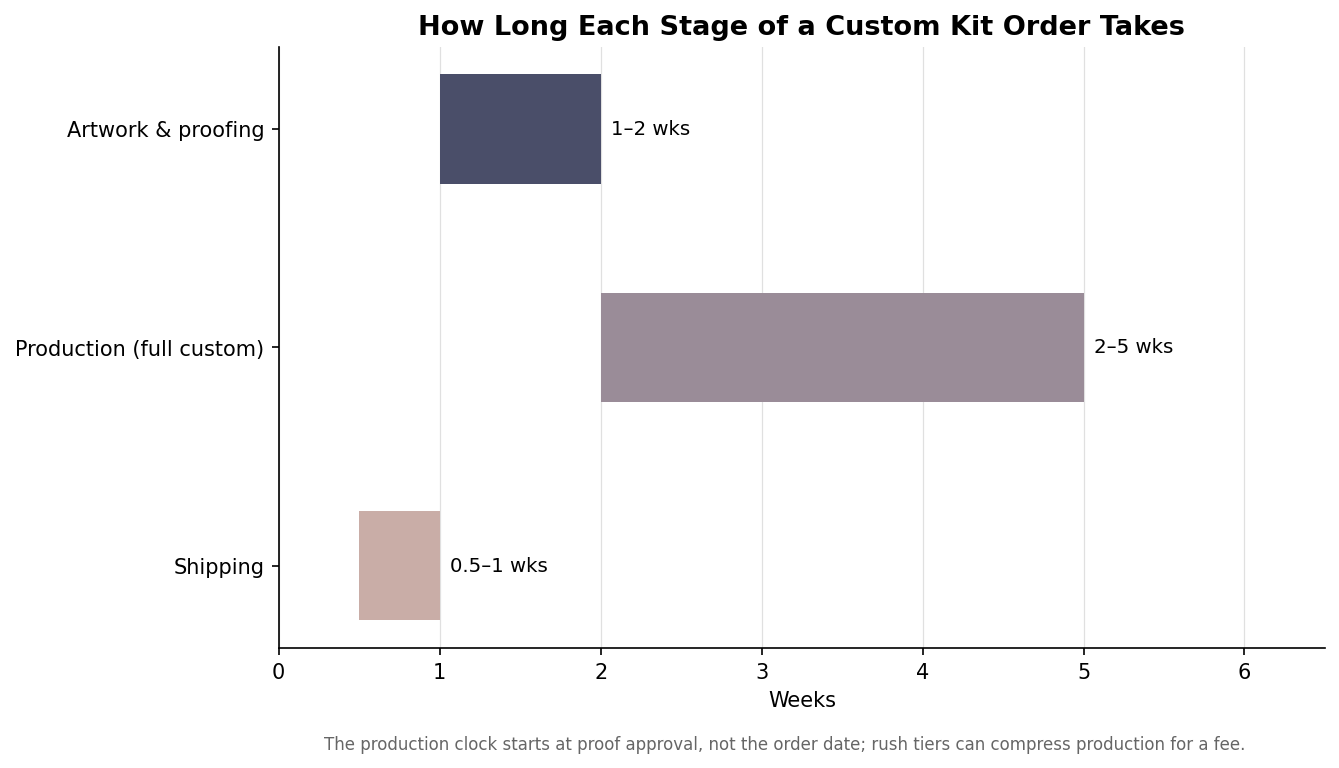
Custom kit is made to order, and the clock does not start until artwork is approved. At Customized Cycling Jerseys, production takes about 2 weeks after you approve the proof, and faster turnaround can be arranged when an event date is fixed. Add the front-end time to finalize the design and sign off a proof, plus shipping, and a comfortable kit order wants roughly a month and a half of runway before it is needed. Teams that start only a few weeks out from a season opener end up racing the first events in last year’s kit. Work backward from the date you need jerseys in hand, and treat proof approval — not the order date — as the moment the production clock begins. If the kit is tied to a specific event, build in a few spare days for a re-proof in case the first sample needs a color or placement correction, because that round trip is the step most likely to slip.
None of these mistakes are exotic. They come from treating a made-to-order, printed-into-the-fabric garment like a stock item you can reorder on a whim. Circulate a fit kit, proof the colors on real fabric, match the weight to the calendar, build a small buffer above the minimum, and start early. Get those five right and the first order is usually the only order you need.